
SH_SlidersUnBias
The SH_SlidersUnBias component randomizes slider values within their bounds so that optimization runs do not all begin from the same hand-set configuration, and defines which variables are active or fixed.
Its label displays the count of active and fixed variables (for example, 8 active, 2 fixed).
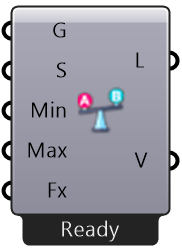
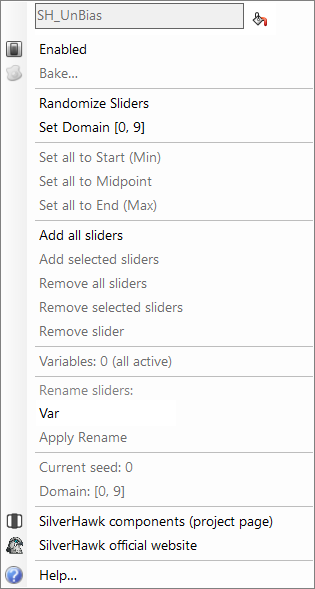
Component Ports Reference
| Port | Name | Description |
|---|---|---|
| G | Genes | The sliders to act on (the exact same sliders connected to SH_Solver). |
| S | Seed | Random seed: 0 = different seed each time; > 0 = strictly reproducible run. Supplying the same seed guarantees every solver starts from the exact same initial coordinates. |
| Min, Max | Domain | New lower and upper bounds applied to all connected sliders via Set Domain. |
| Fx | Fixed | Zero-based indices of variables to exclude from the optimization (e.g. a panel containing 14, 23, 27). Fixed variables retain their current value throughout the entire run. |
| L, V | Outputs | L: Log summary of the last randomization (old |
Variable Masking & Canvas Setup
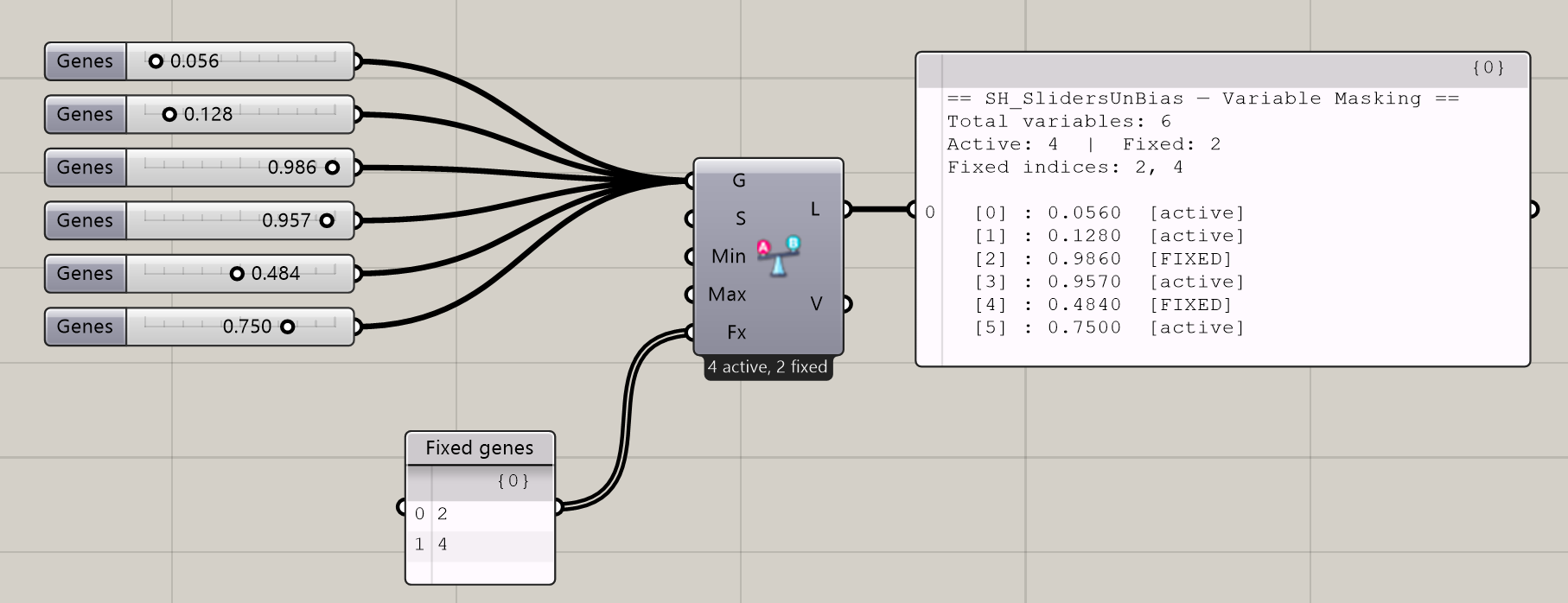
Wiring a panel of zero-based integers into input Fx fixes those specific variables, allowing you to selectively freeze parameters without dismantling your Grasshopper definition:
Multiple UnBias Warning (Union Merge)
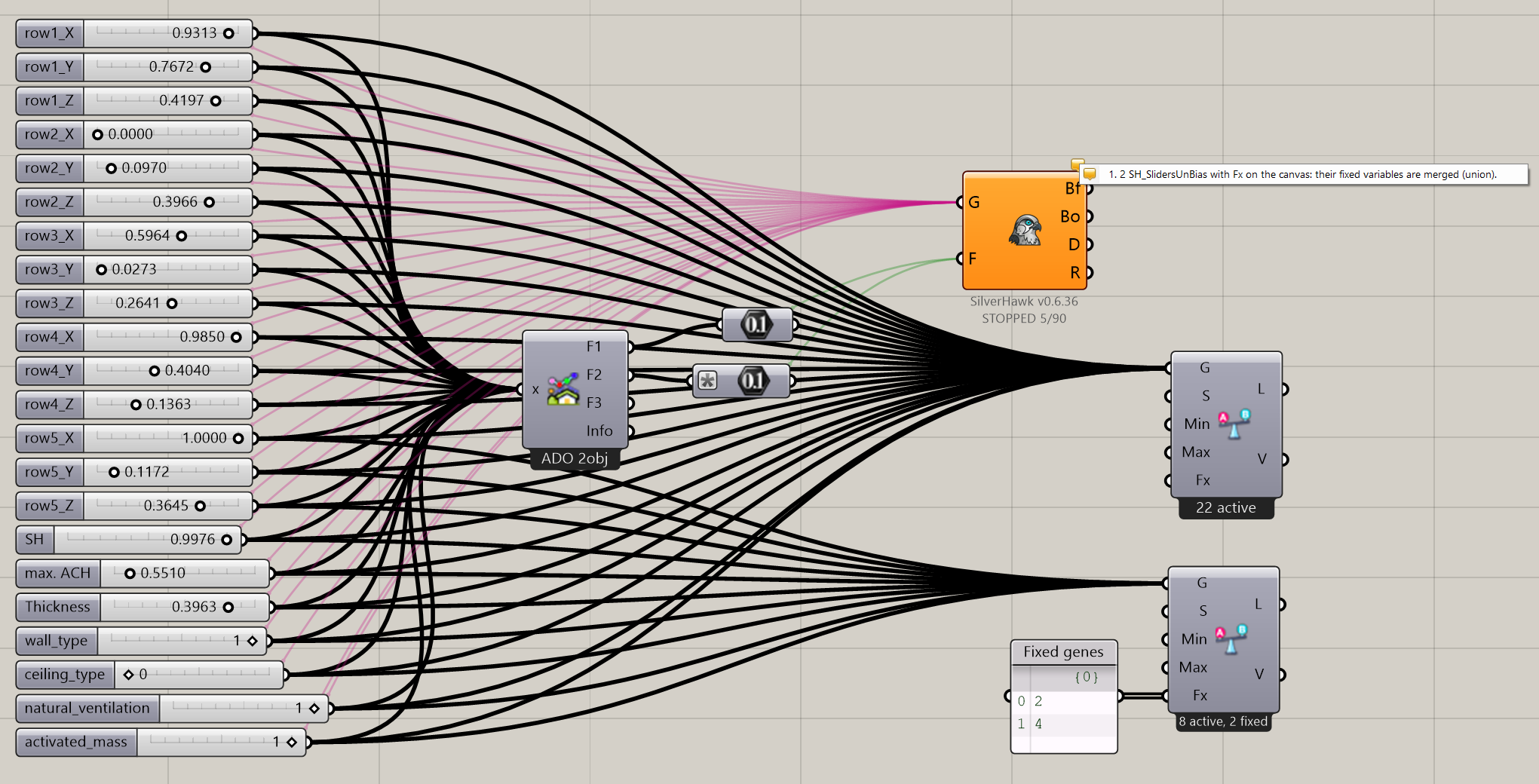
If several SH_SlidersUnBias components with Fx are placed on the canvas, the solver merges their fixed variables (union) and reports it with an orange warning balloon on the component:
BENCHMARK INTEGRITY & REPRODUCIBILITY
When conducting academic benchmarks or multi-run statistical comparisons, setting an integer seed in S (